
I have a particular interest in how performance, ecology and material reuse intersect. My work investigates how spaces can support cultural expression whilst embedding wellbeing, sustainability and biodiversity at the core of design.
I have a particular interest in how performance, ecology and material reuse intersect. My work investigates how spaces can support cultural expression whilst embedding wellbeing, sustainability and biodiversity at the core of design.
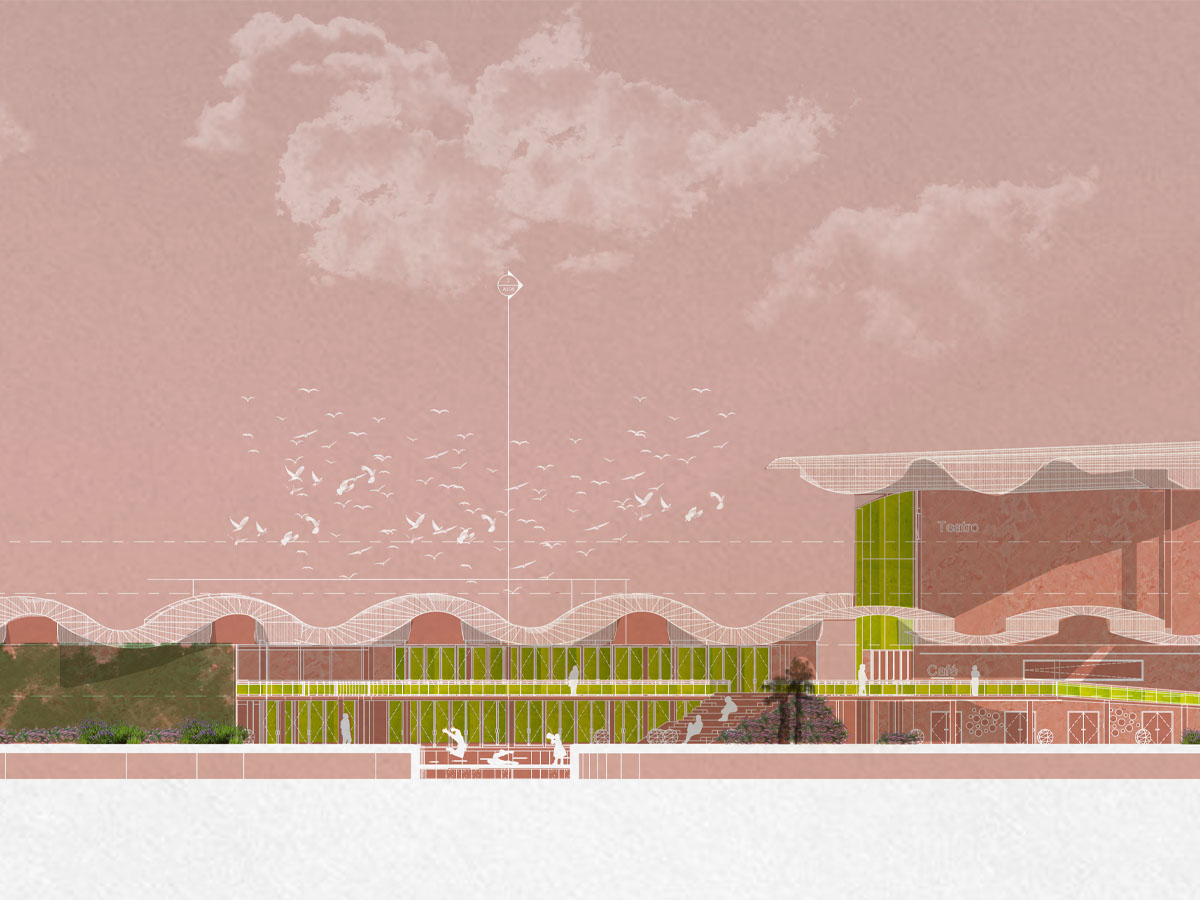
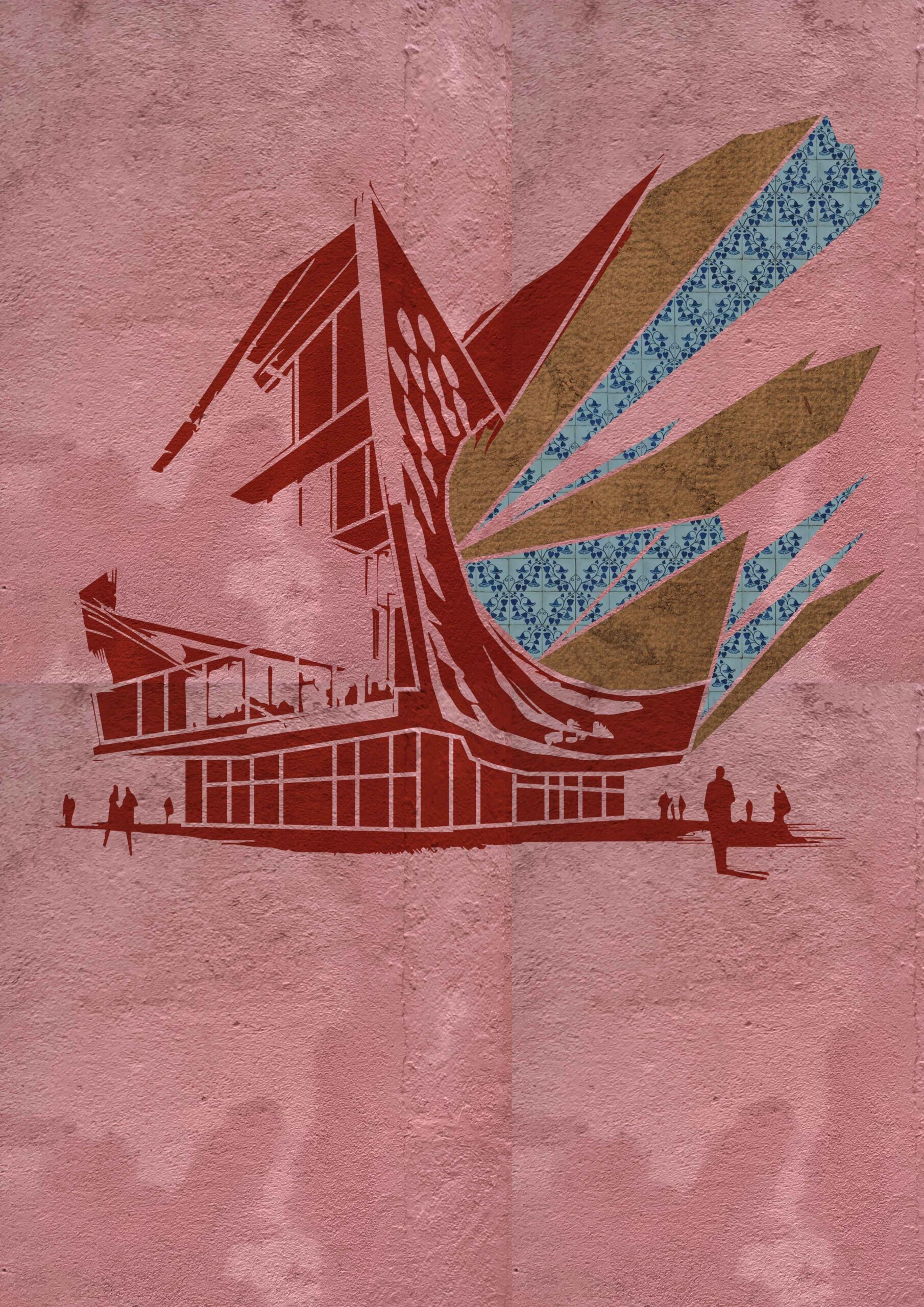
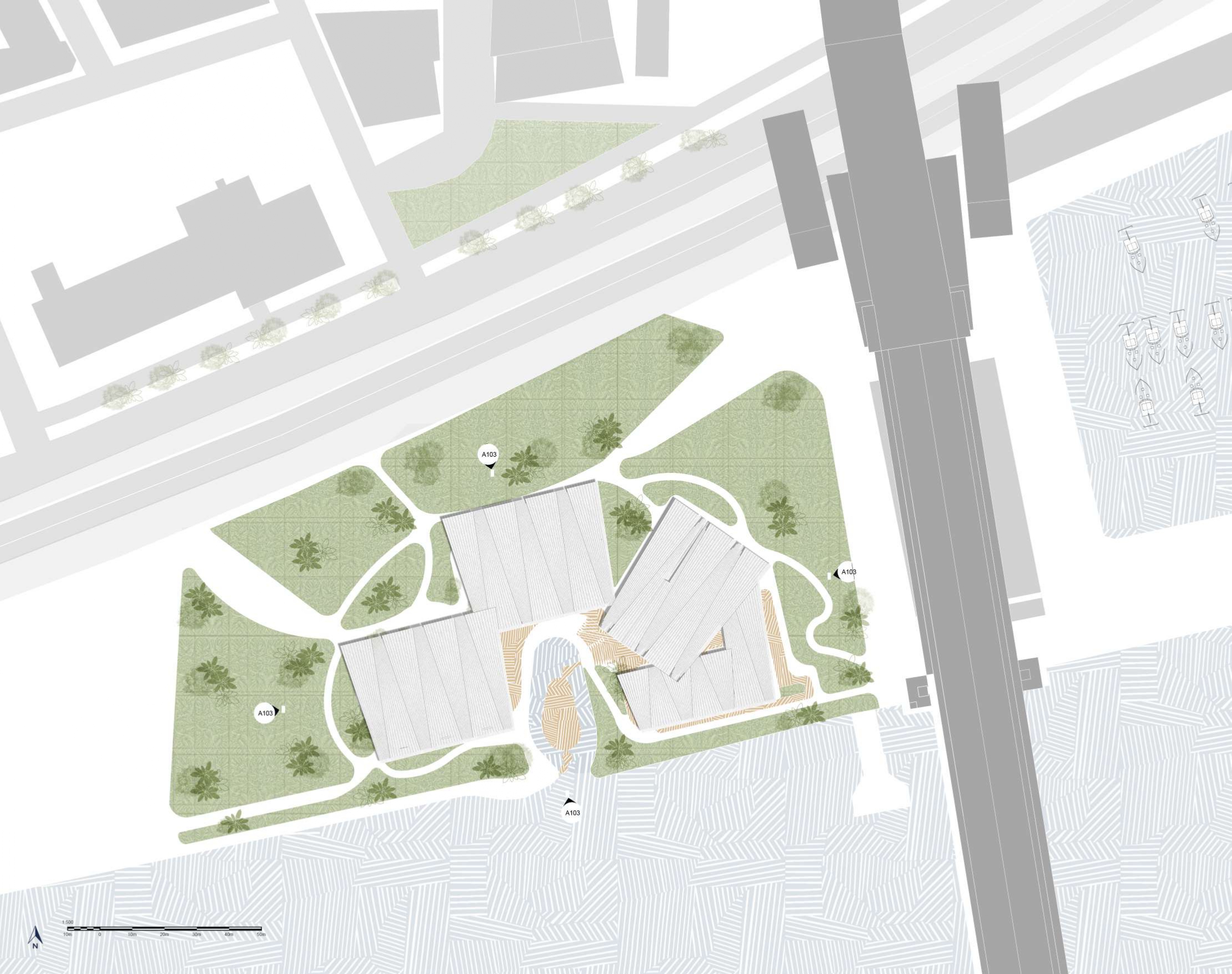
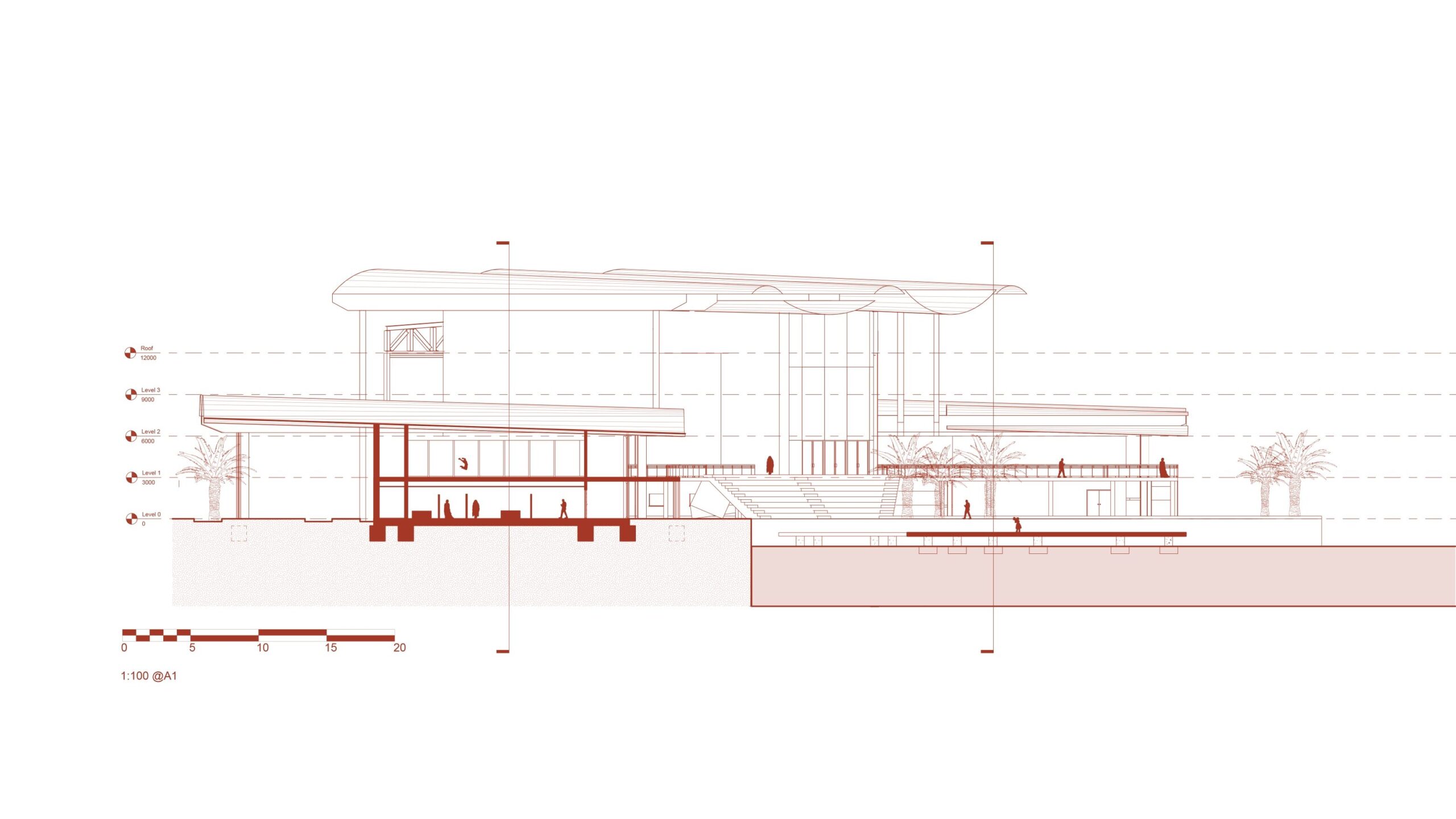
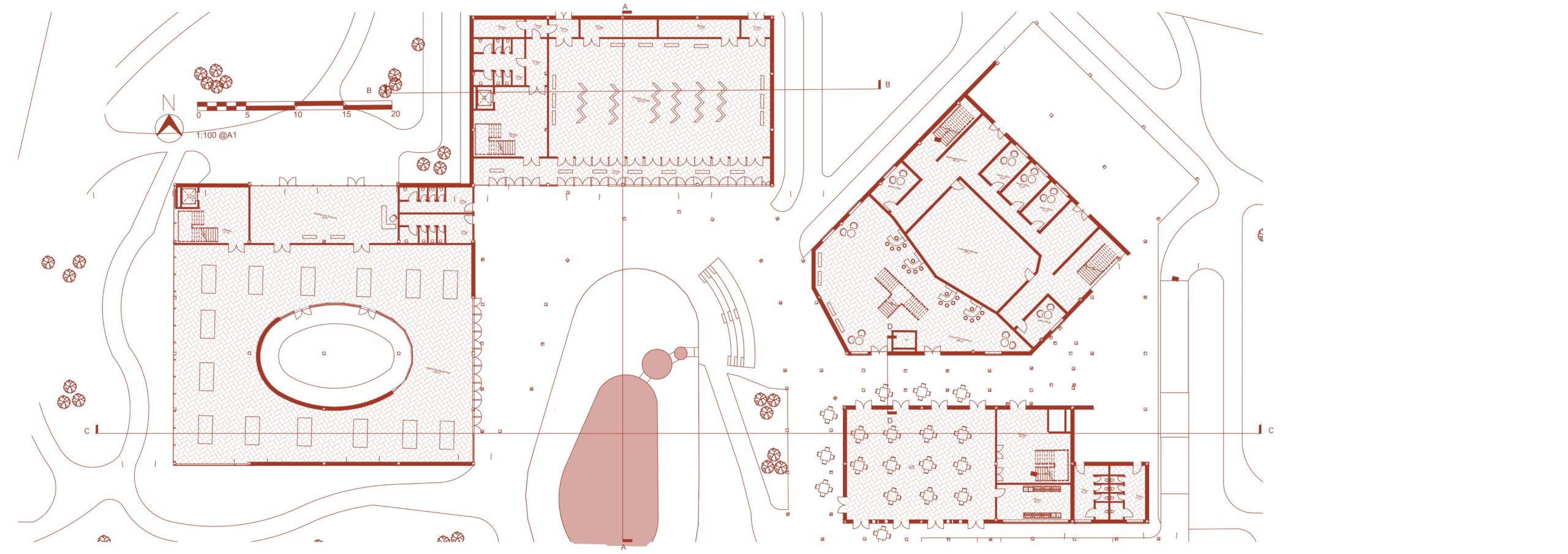
The Performance Trade Centre, located in Alcântara, Portugal, combines theatre, sustainability and material reuse. With the use of responsive architecture and recycled textiles, it transforms performance spaces into evolving environments that are adaptive, living systems.
A theatre can be more than a stage. It can perform, adapt and sustain itself by including responsive architecture, material circularity and ecological systems, in order to redefine performance spaces as both regenerative and creative.
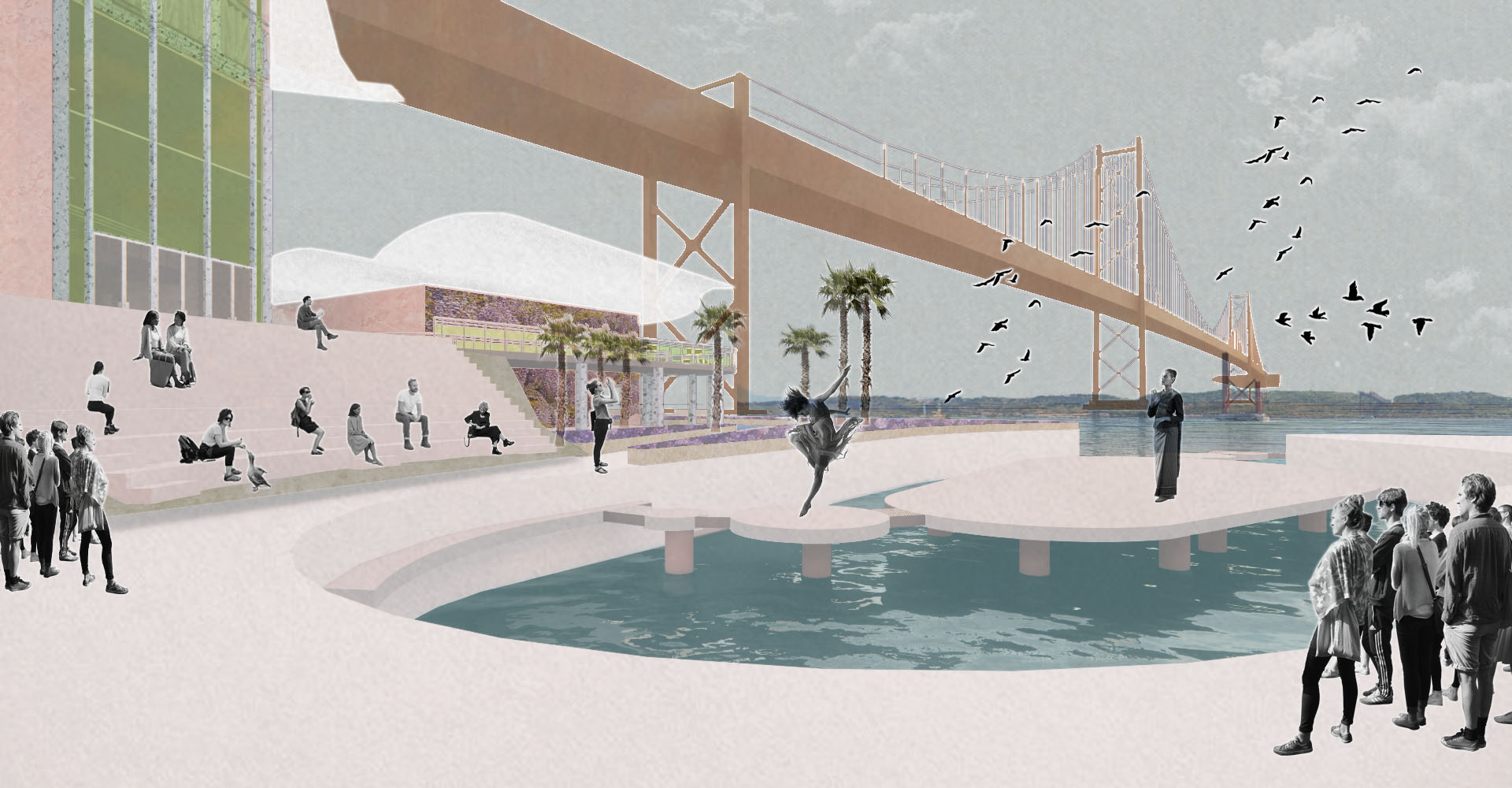
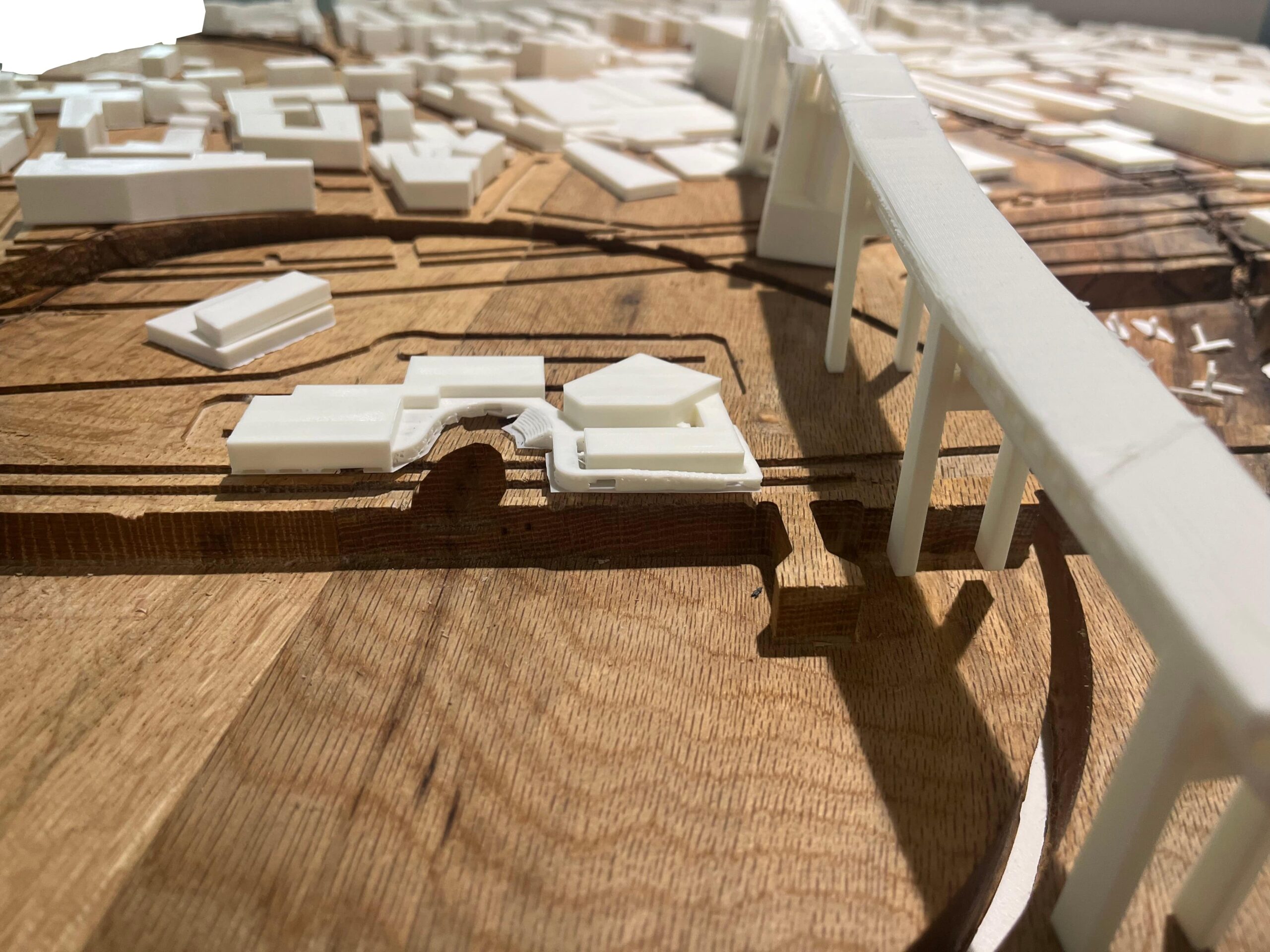
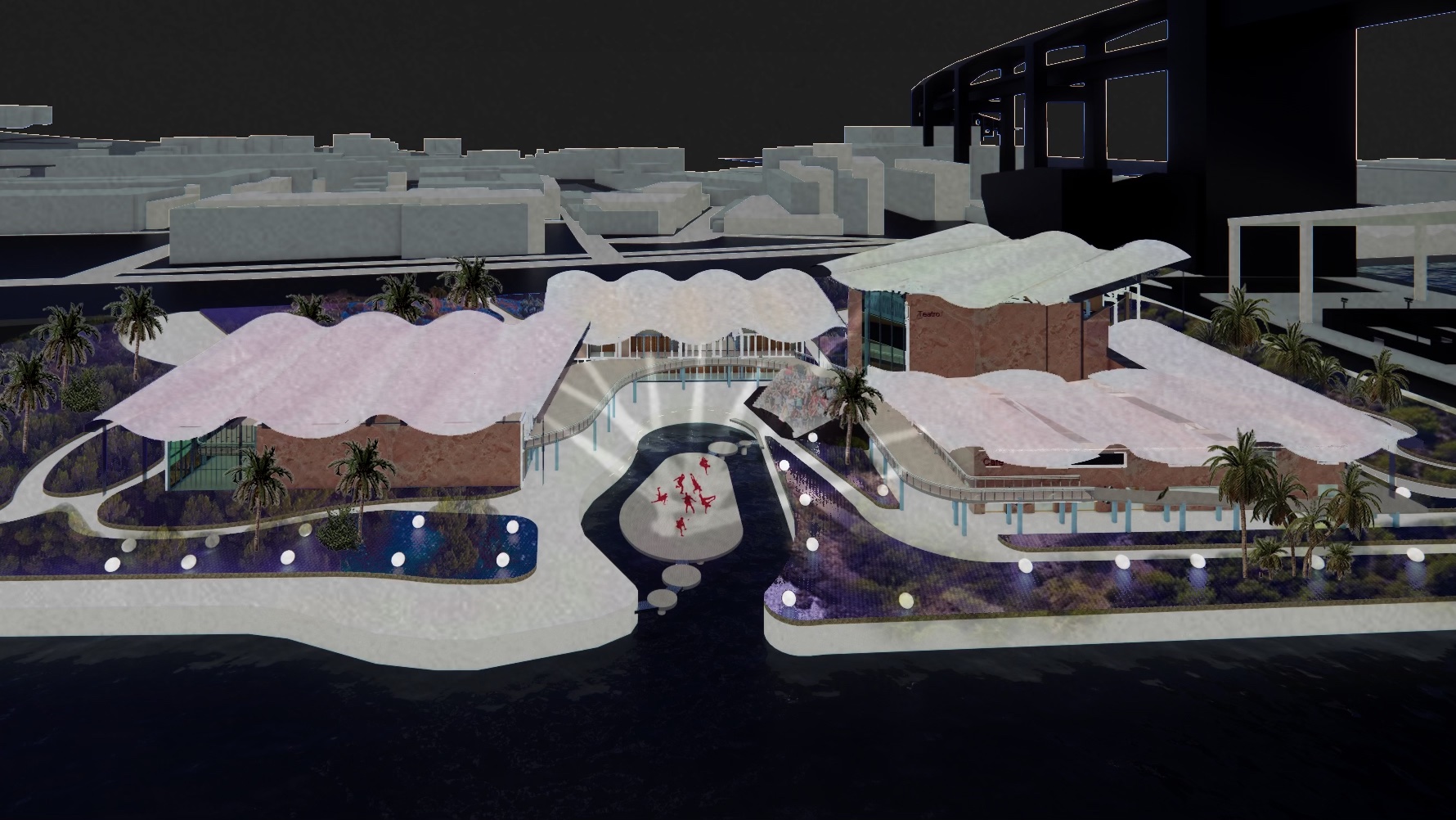
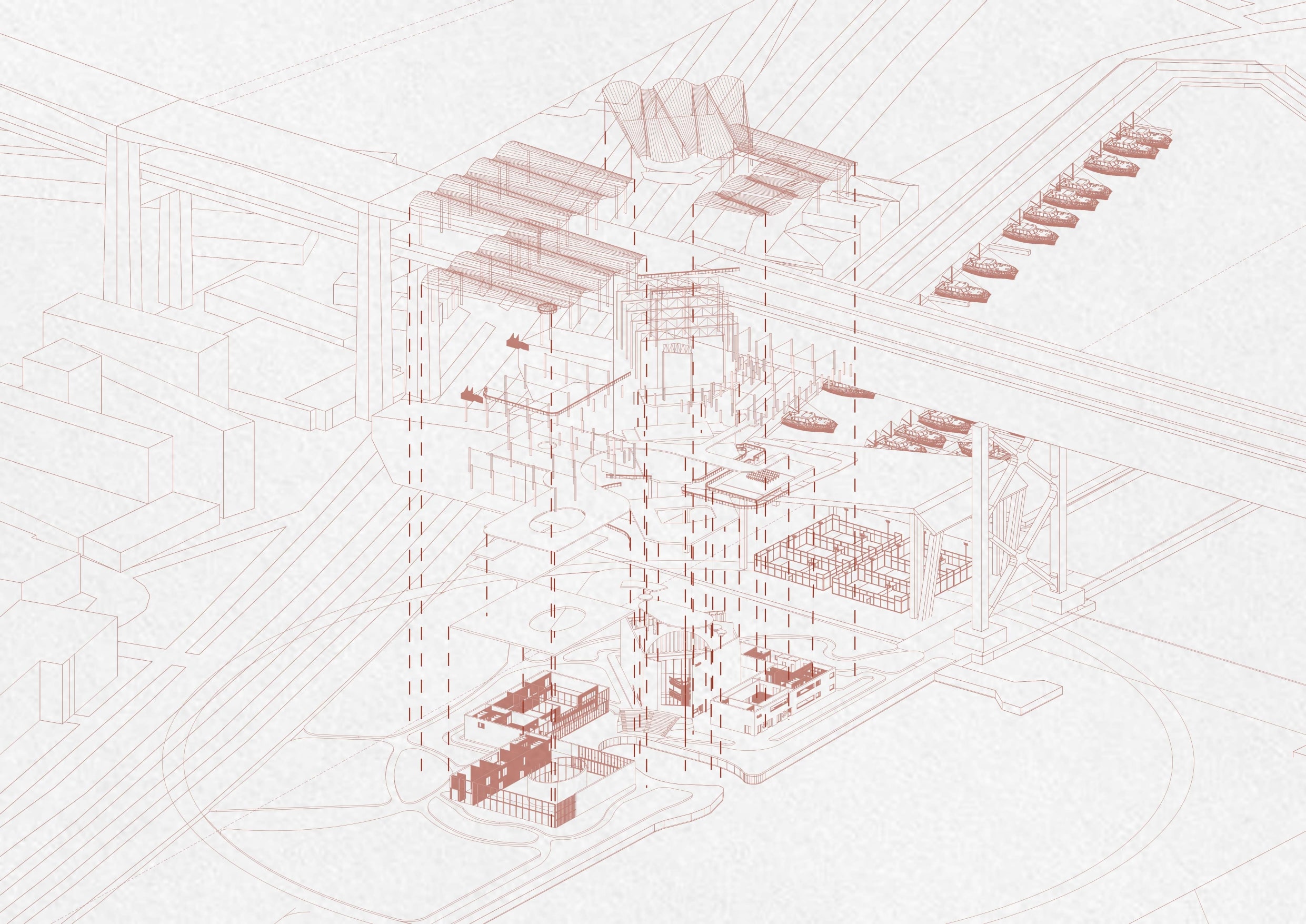
This project envisions an active, evolving spectacle, along the banks of the River Tagus, in Alcântara, Portugal. It is more than just a theatre; it is also a Performance Trade Centre, where there is a continuous loop of exchange and transformation, where architecture, movement and materiality interact. It not only hosts performances, but also becomes a performance itself.
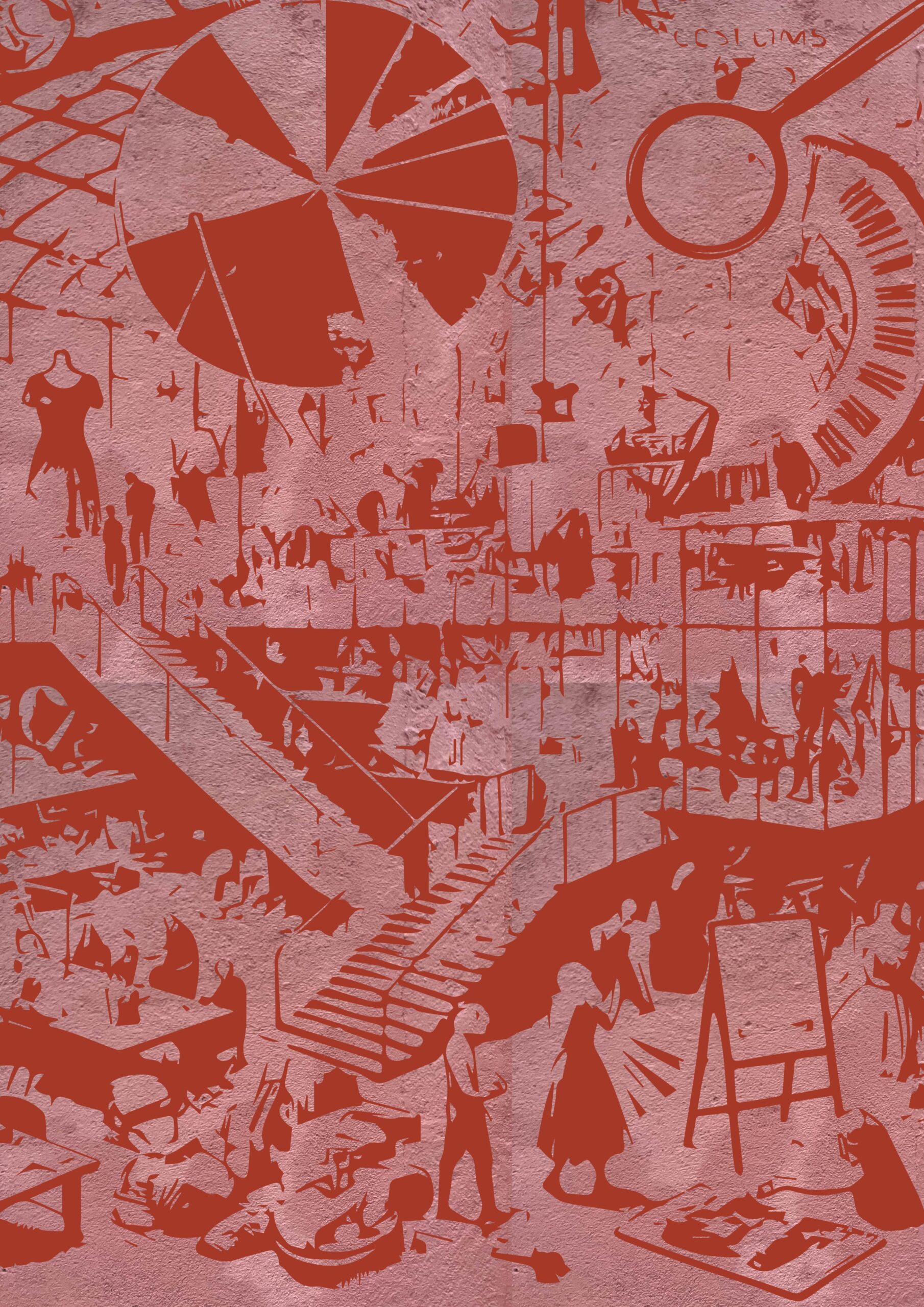
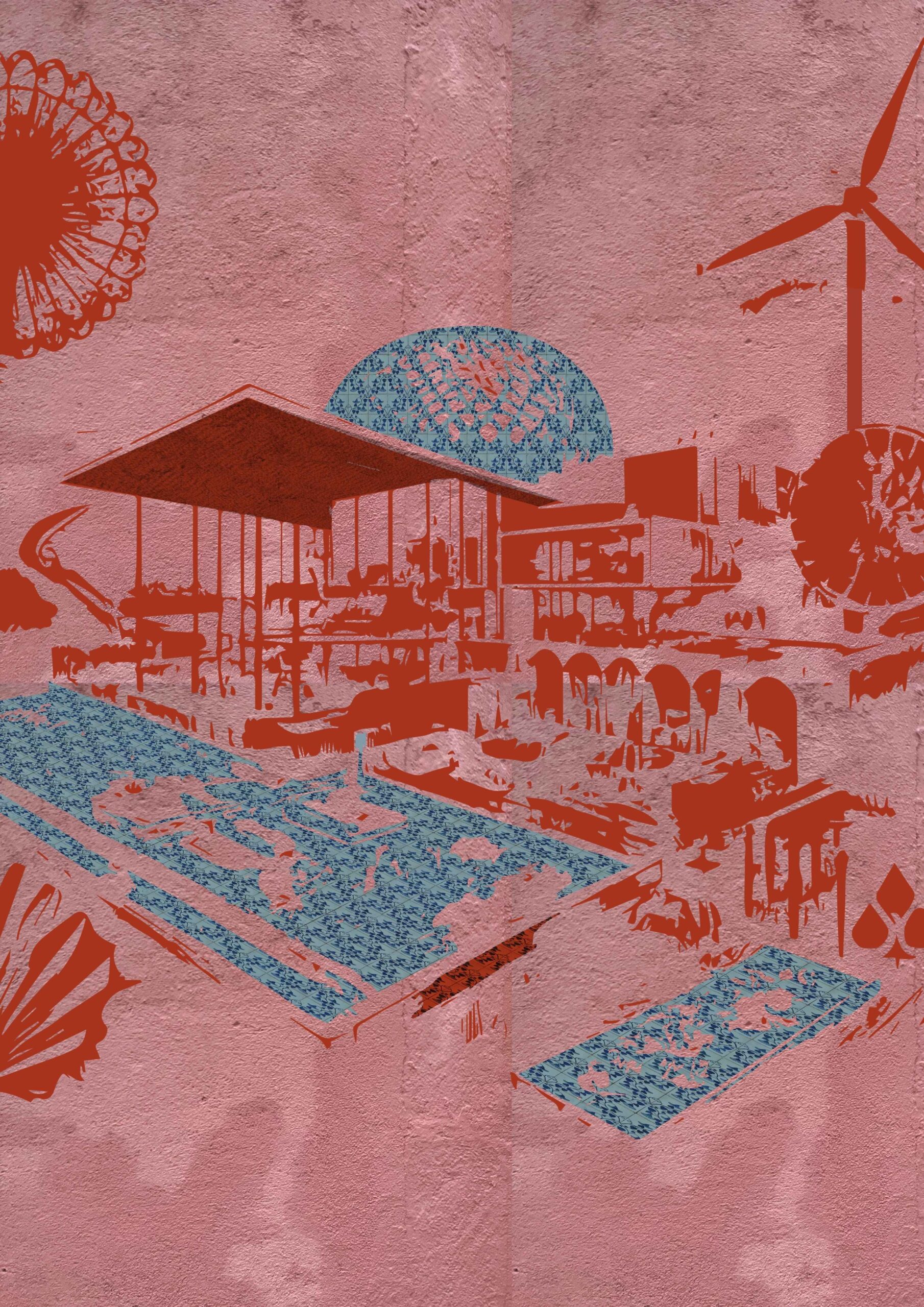
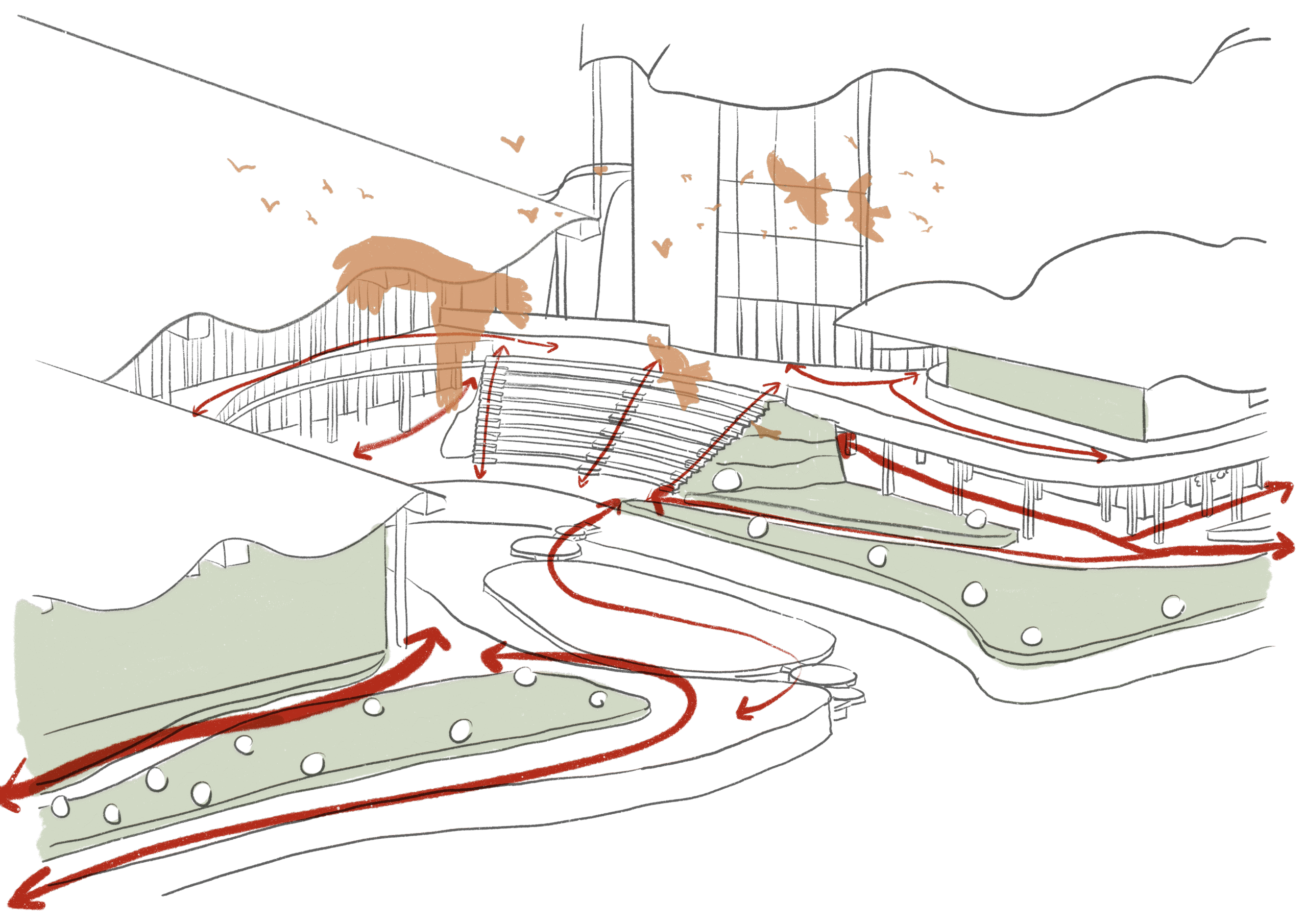
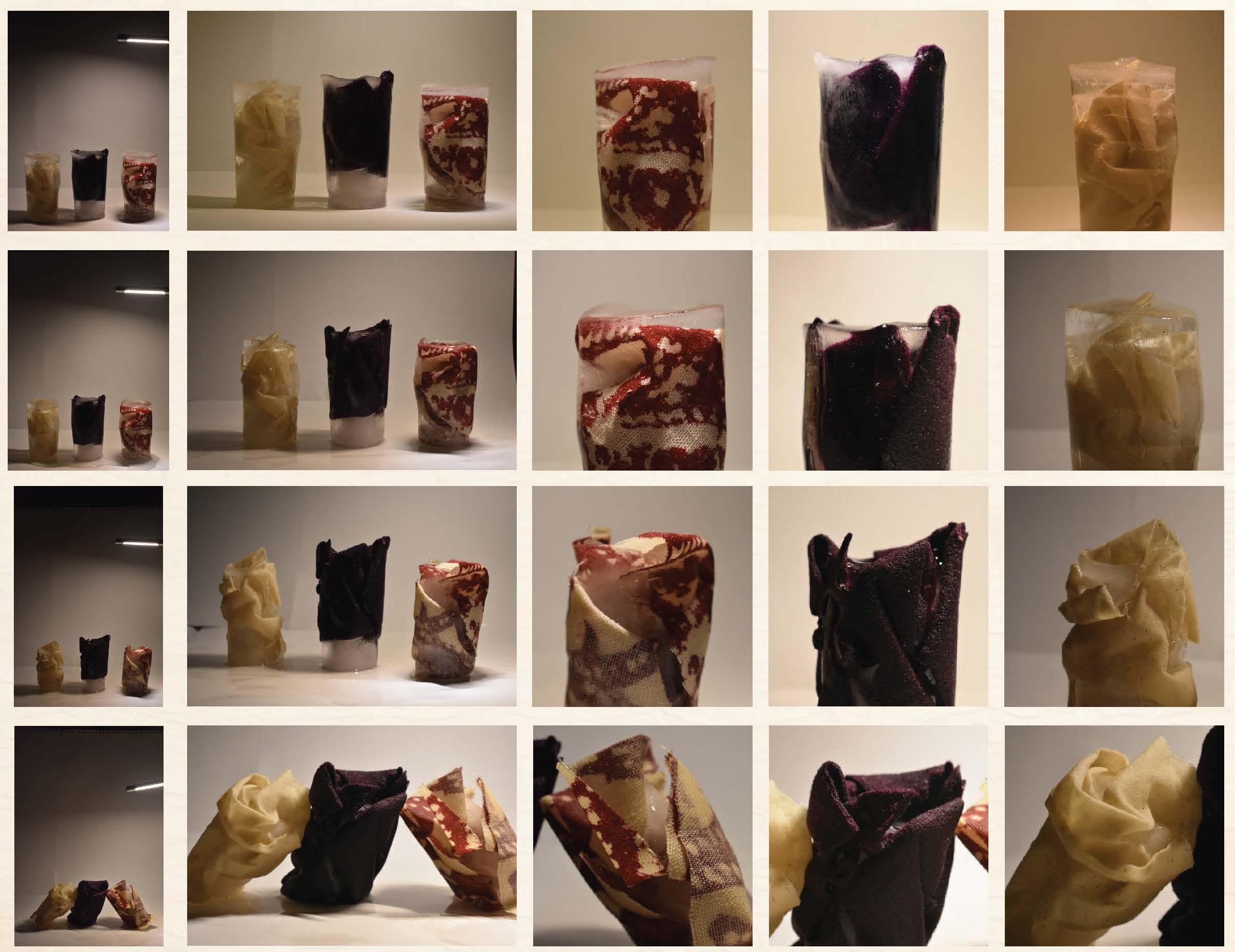
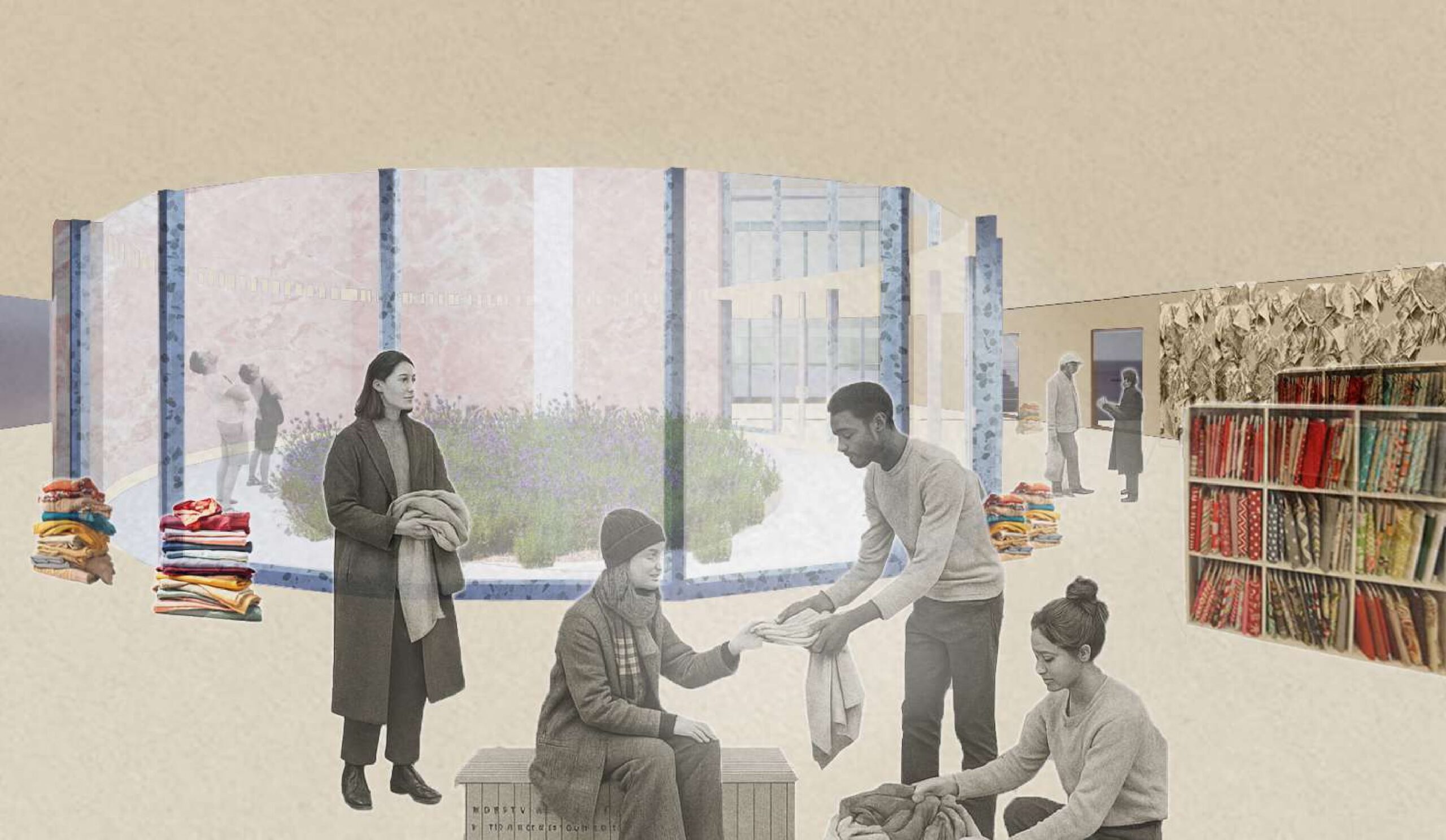
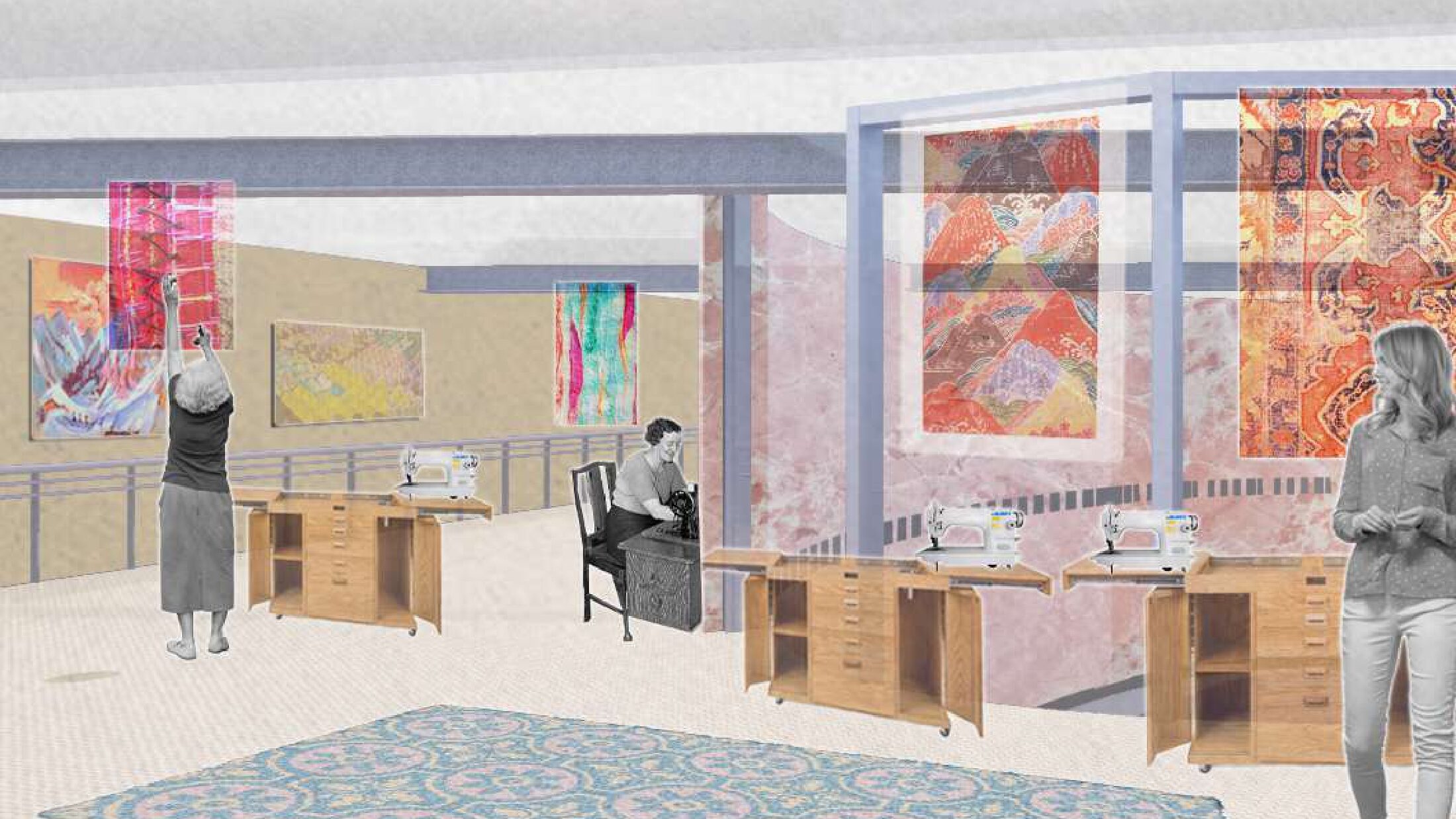
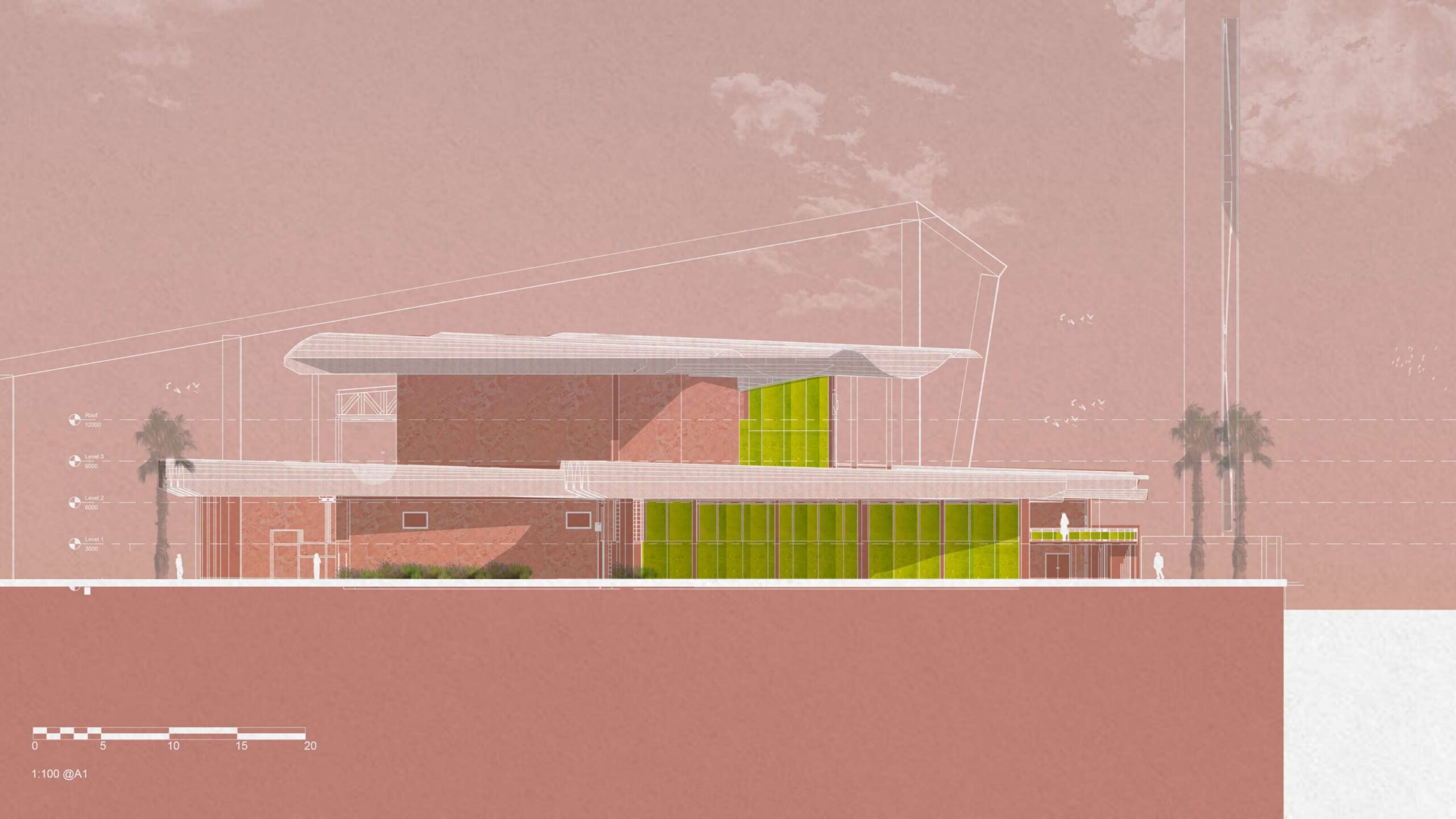
At the core of the design, it redefines theatre as a living system, challenging the static nature of traditional performance space. The building is responsive, with the architecture shifting, reacting and breathing. Kinetic façades respond to light and wind, moving in harmony with the adjoining environment, fabric structures channelling water for passive cooling. The space is influenced by the fluidity of nature and performance, and the design of the intervention blurs the lines between space, performer and audience. Performance becomes an immersive experience, where the environment is an active participant. Additionally, the building includes a material trade hub, a place for discarded textiles to be collected and re-purposed into acoustic elements, set designs and costumes. This sustainable approach embeds a story of reinvention and circularity into the very fabric of performance, whilst also reducing waste. This ensures that performance is not just seen, but physically woven into its surroundings. The space is further choreographed by natural elements. Bio-reactive algae façades, algae taken from the River Tagus, and passive cooling techniques help create a self-sustaining environment – one that is in constant dialogue with its cultural and ecological landscape. It is a theatre that not only presents stories, but is also shaped by them and adapts to Lisbon’s creative and environmental rhythms.
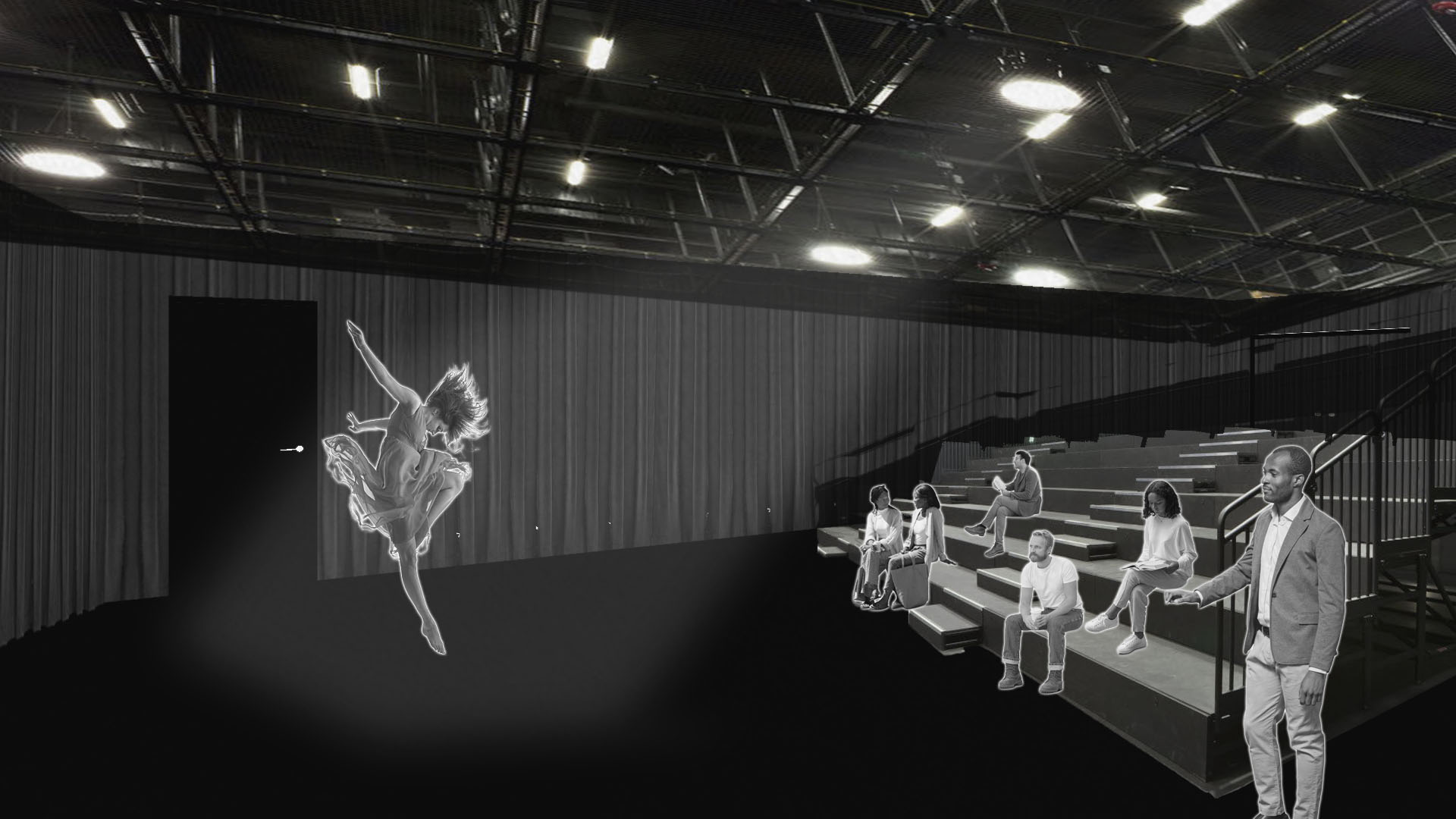
Designed to accommodate everything from large-scale festivals to intimate experimental performances, the design does not just create a venue, it redefines performance as a responsive act. It is a space where dance, music, theatre and interdisciplinary collaboration can thrive. It responds to the requirements of Lisbon’s artists, performers and makers. By fusing performance, sustainability and architecture, it produces a new kind of theatre: one that lives, breathes and evolves, just like the city it belongs to.