I am a dedicated student, committed to following the path to full accreditation. I enjoy testing the limits of unconventional building design and conceptual approaches to building function and structural systems, pushing beyond the most comfortable boundaries to achieve more.
Return to the Tagus
Sketched Building Axo
Project Narrative
Lisbon has long had an intrinsic relationship to Tagus River estuary, a relationship that enabled the nation to dominate the world’s seas and obtain goods for the first time which have become poignant to modern lifestyles. Over time, Lisbon’s attitude towards the Tagus has been reduced; dangerous tides, high levels of water pollution, busy industrial ports and the great span of the river means that it’s a ‘noticeable’ rather than a ‘need’.
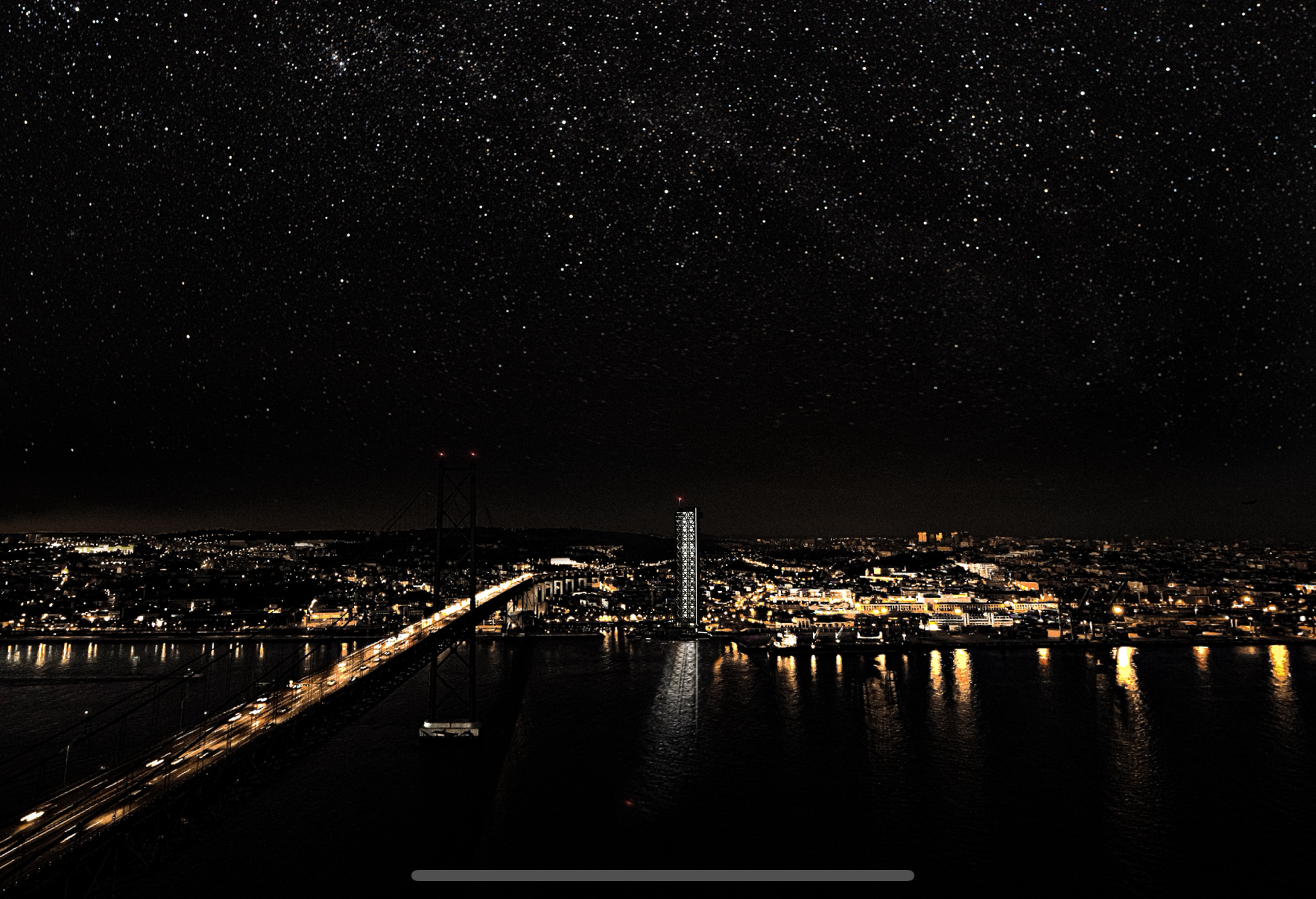
This project looks to re-revere the relationship that Lisbon once had with the river, testing solutions to modern-world problems in the form of a decisive piece of architecture that encompasses a multitude of functions that share common river-orientated themes. The final architecture favourably dominates the skyline, balancing the visual landscape, mirroring an iconic landmark of the city. The building enables city views that were once only accessible in heavy and inevitable bridge traffic, a disappointing revelation for such a closely intricate and walkable city. The views extend south, an opportunity to understand the river’s dynamic relationship with the land and the personal moments that the river enables.
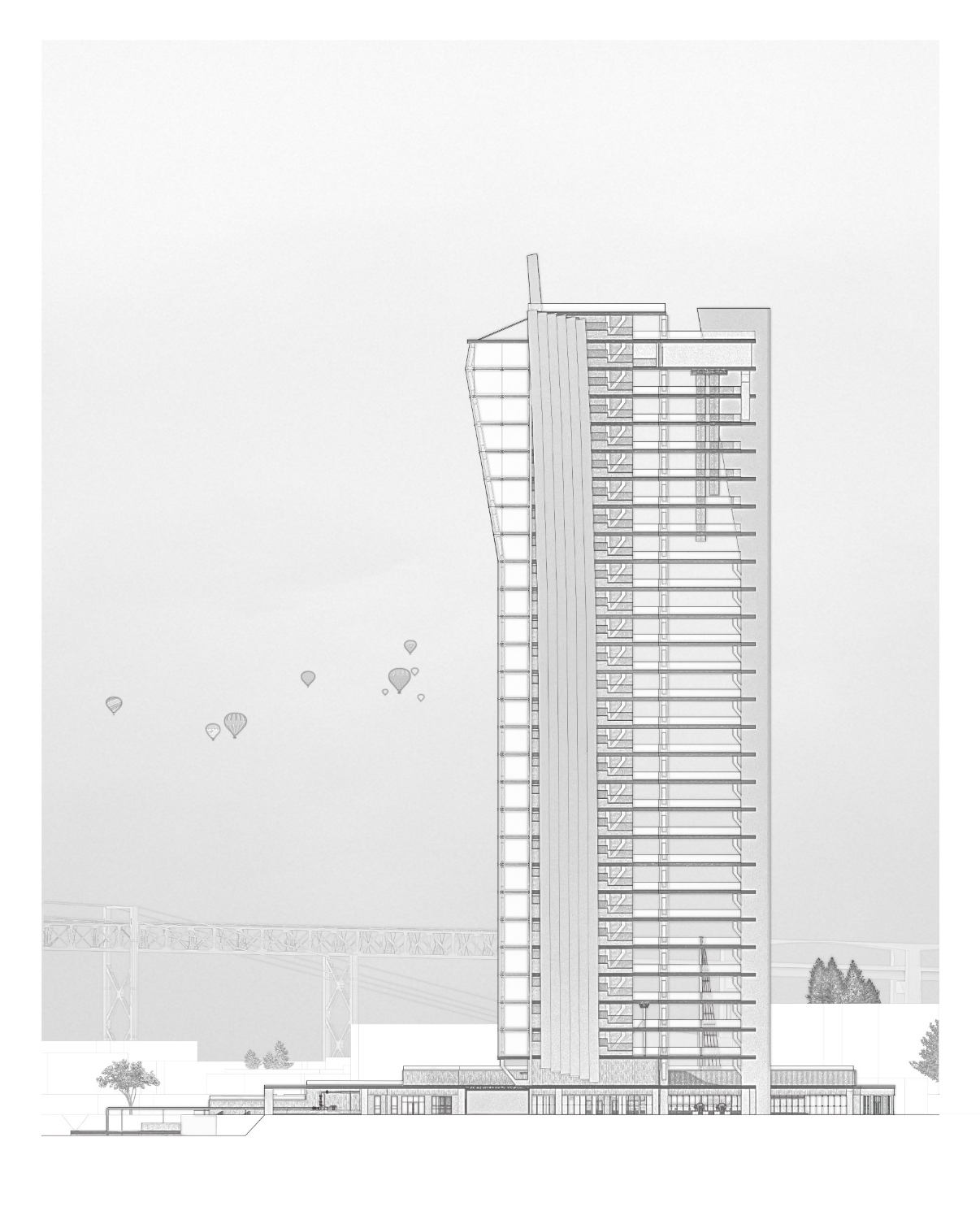
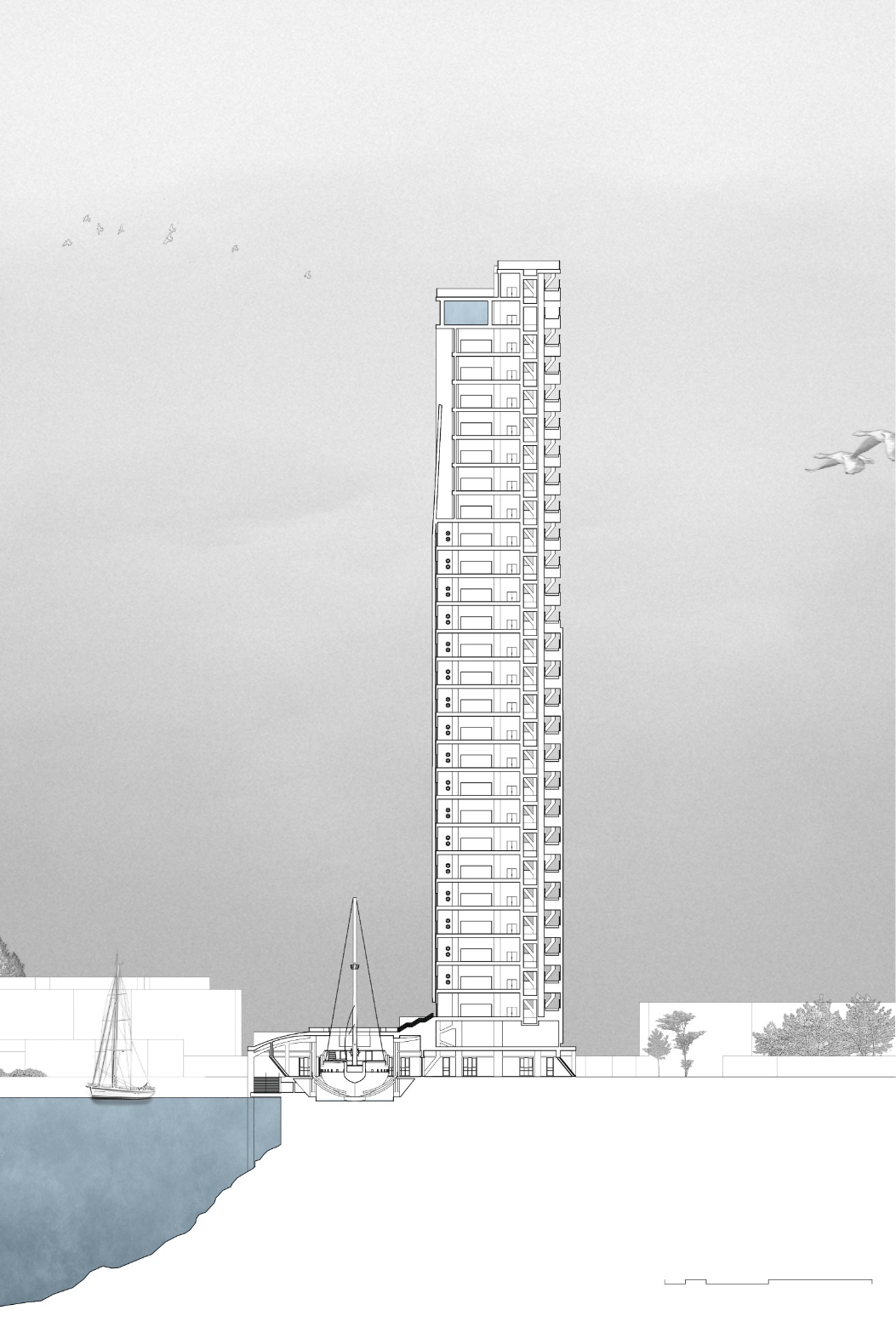
Standing at 208m, the height is an important feature of the design, but the height exists as a requirement for one of the building’s most unique functions – a function that reevaluates the purpose of buildings and modern environmental advancements.
The building functions as a water battery, a carbon neutral storage opportunity and precedent for Portugal’s extreme abundance of solar power that exists only when the sun is present but disappears as an unobtainable relic when the people of Lisbon return from work in the evening and turn on their evening entertainment. The building captures this energy abundance in the day and releases the energy back to the grid at night. It is not a power generator but an attitude that solar power can support Lisbon longer than the time the sun rises.
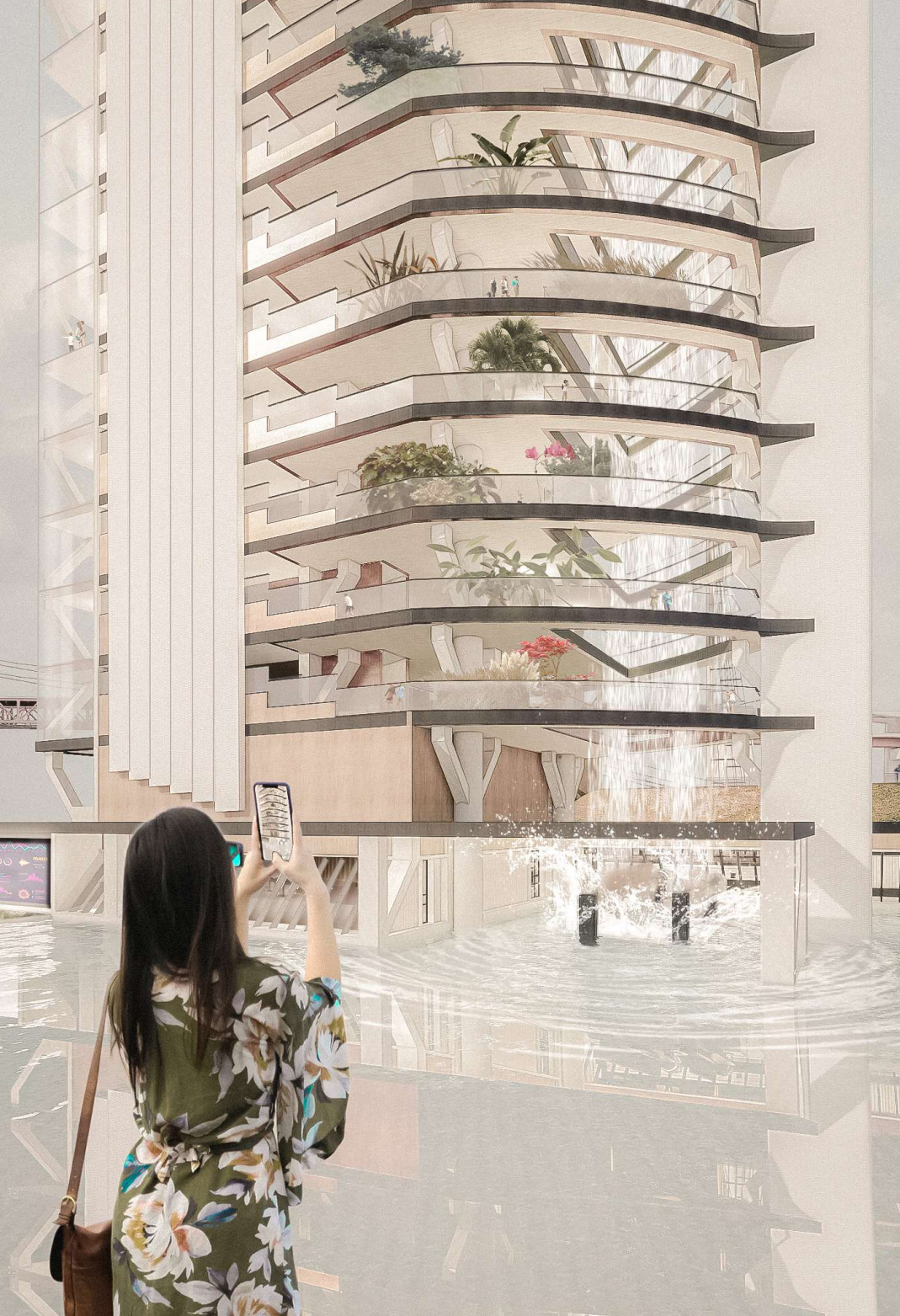
The abundance of energy during the day pumps Tagus River water through the structure of the building, in a visually inspiring manner, cleaning the river water from the high concentration of pollutants before storing the water in a large tank 190m in the air. The water remains here whilst the sun powers Lisbon, but once dusk occurs, the water is released in a dramatic spectacle, free-falling, and releasing the gravitational potential energy enabled by the height from which it falls.
The water falls and rotates turbines at the base of the building, providing further power to Lisbon’s grid. The water then follows through the building, before returning, clean and useful, to the Tagus.
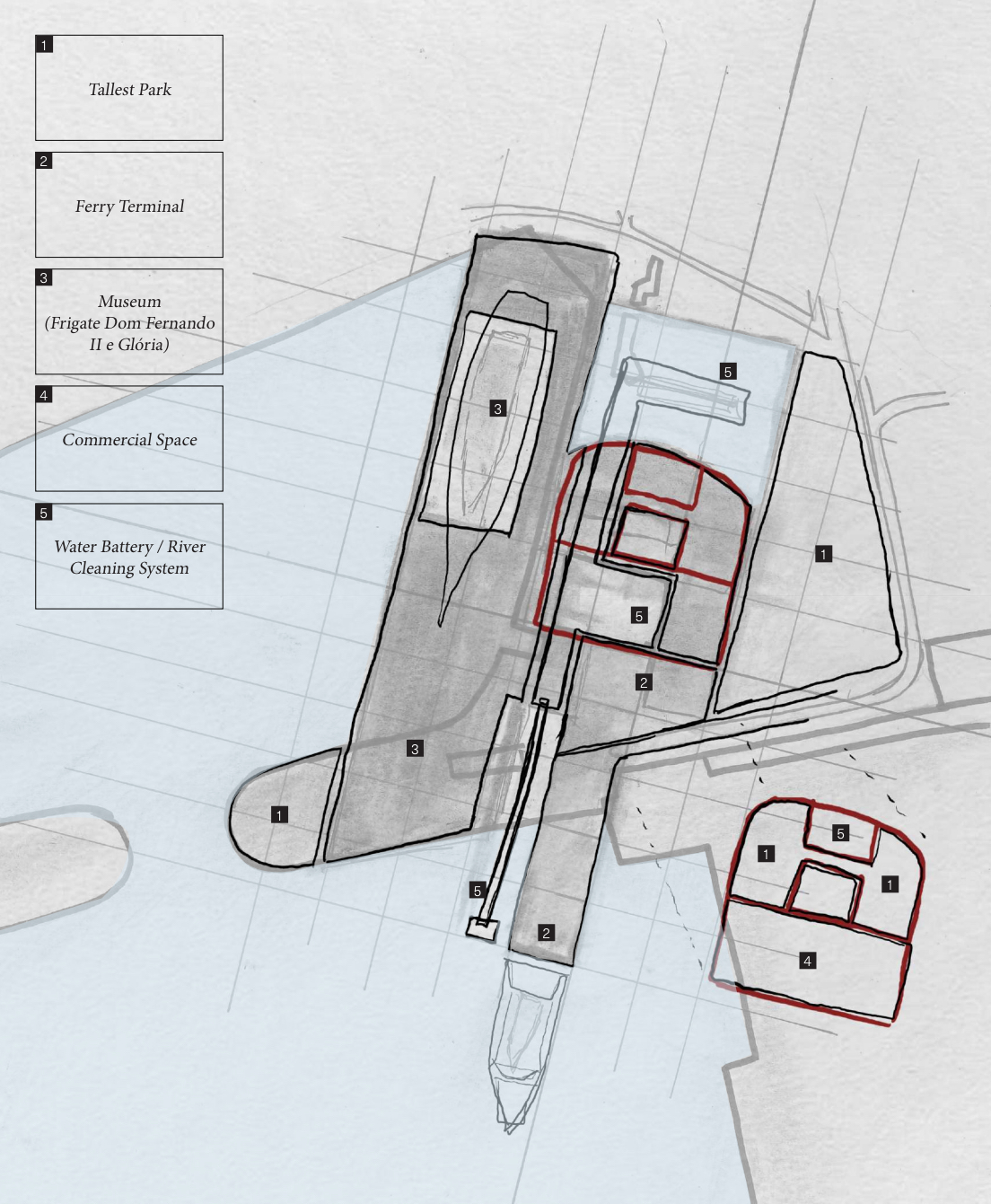
The height also allows for further building functionality: to support the cost of the power service, the building has 24 rentable commercial floors, all with direct access to a continuous park that extends the green space priory far beyond the extents that were intended in the council’s site plan.
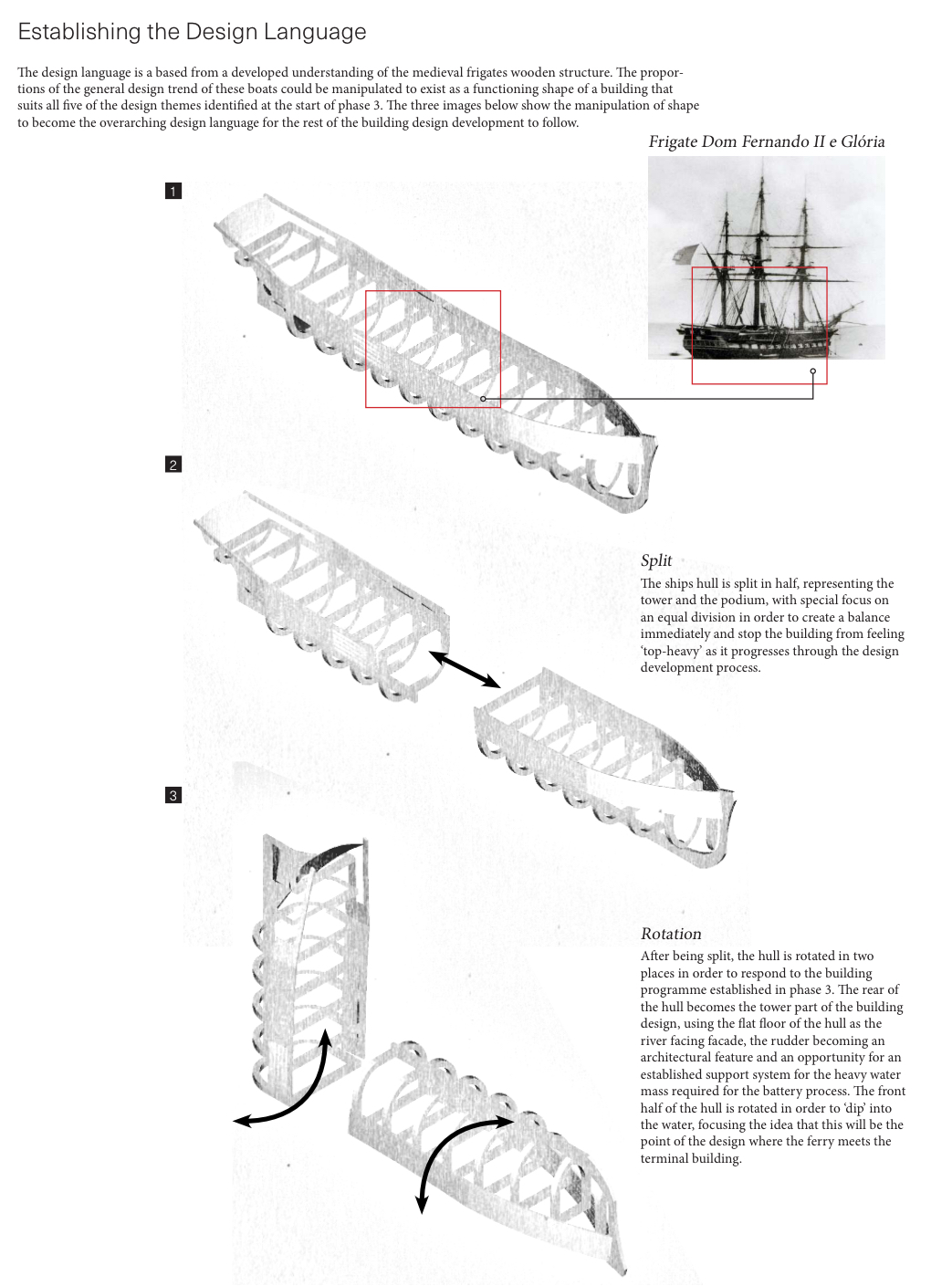
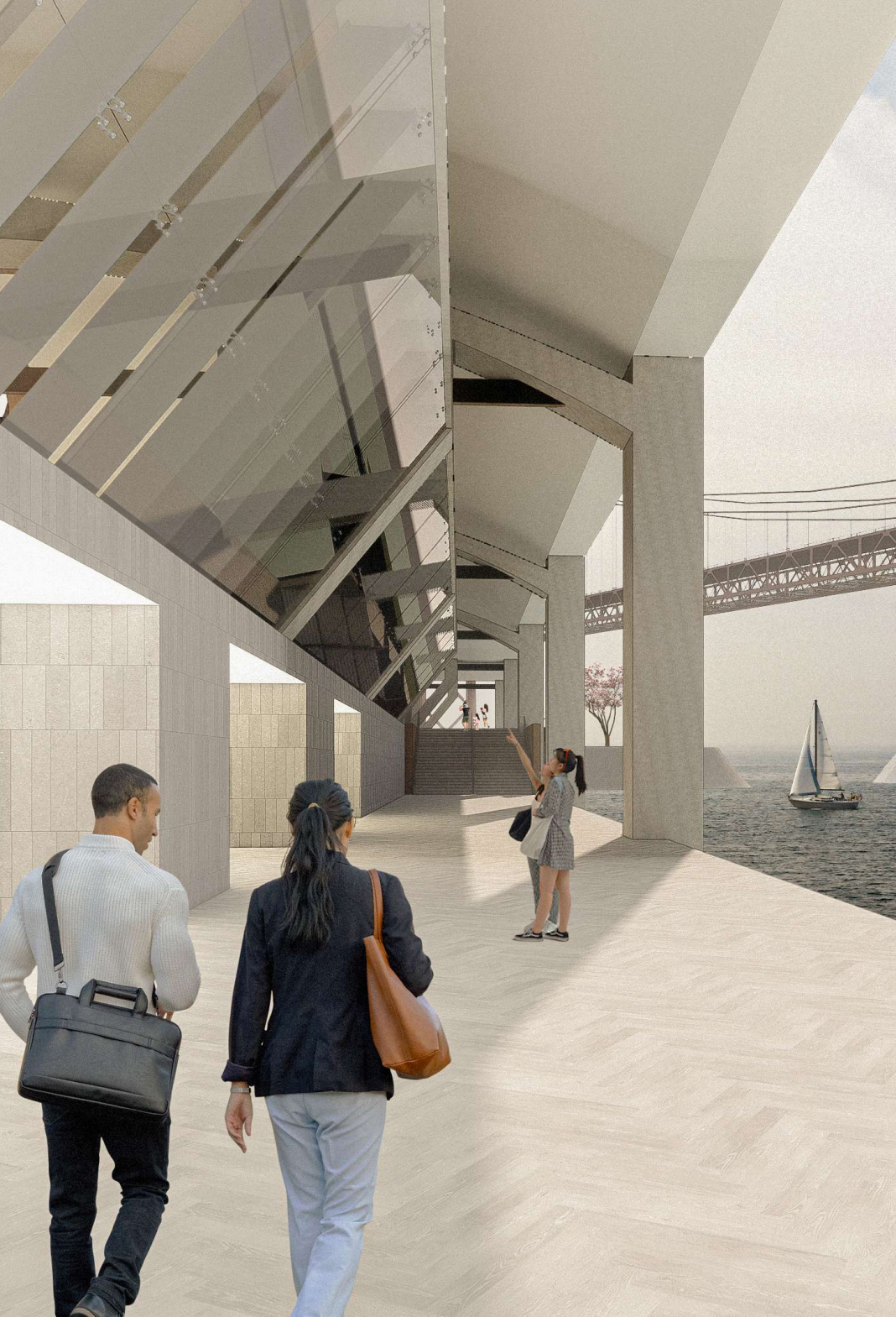
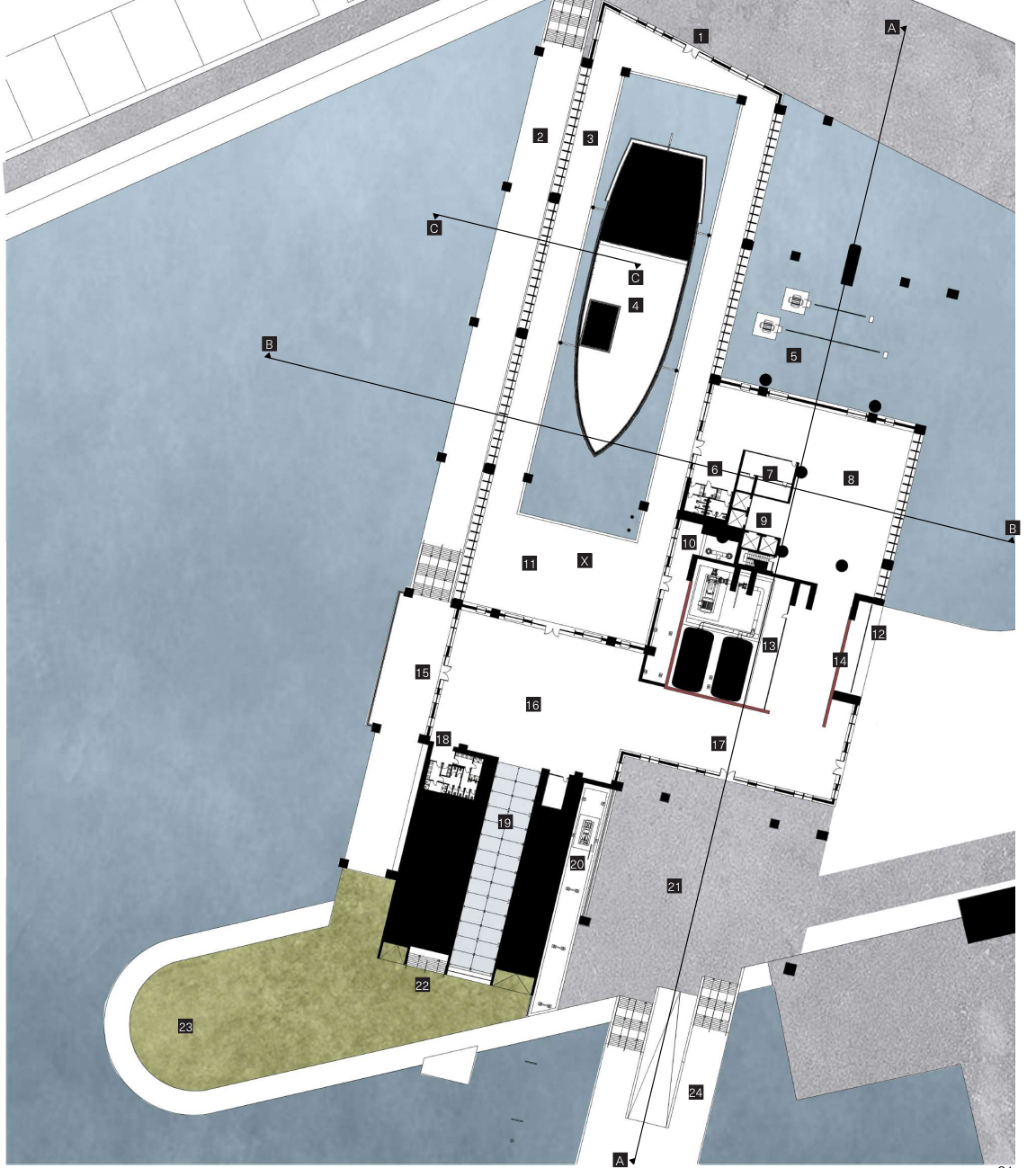
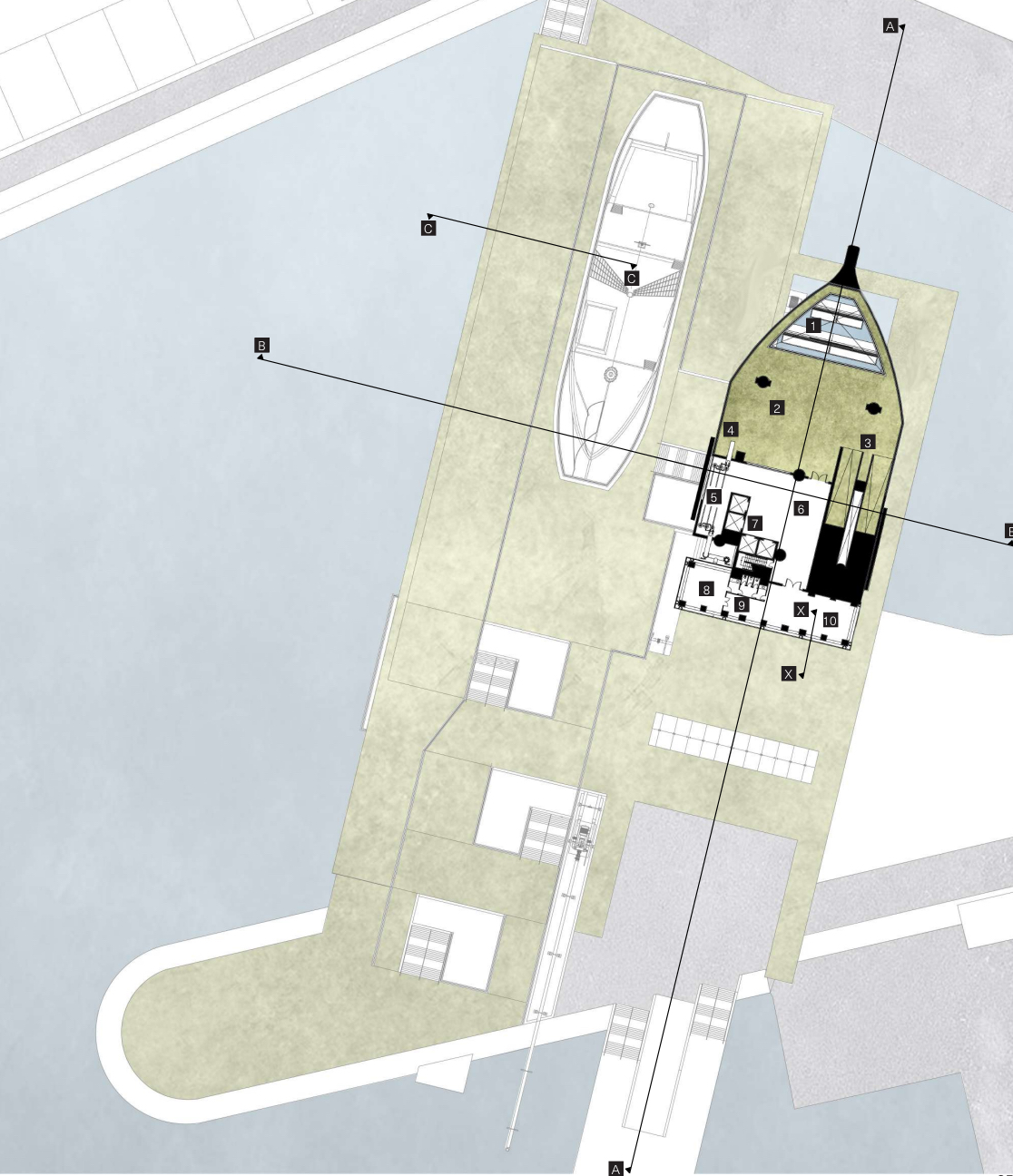
The connection to the river can be directly accessed by the public though a new ferry terminal and slip creating a closer connection between the Alcantara and Almada districts, as well as re-homing frigate Dom Fernando II e Glória from its current home in an Almada carpark, while also offering full surround views and a reenactment of its former use by rising and falling within the water flow system.